
About Dina + Enough Labs
I built Enough Labs for the space between knowing and acting.
That moment when you know what needs to happen, but you are still gathering evidence, managing everyone else’s reactions, or waiting for enough certainty to make the decision feel safe.
I know that space intimately.
I have spent more than twenty years watching brilliant leaders hesitate inside it.
And if I am being completely honest, I have spent parts of my own life there too.
Enough Labs exists to help leaders trust what they know, claim the authority they have, and move when the moment requires them.
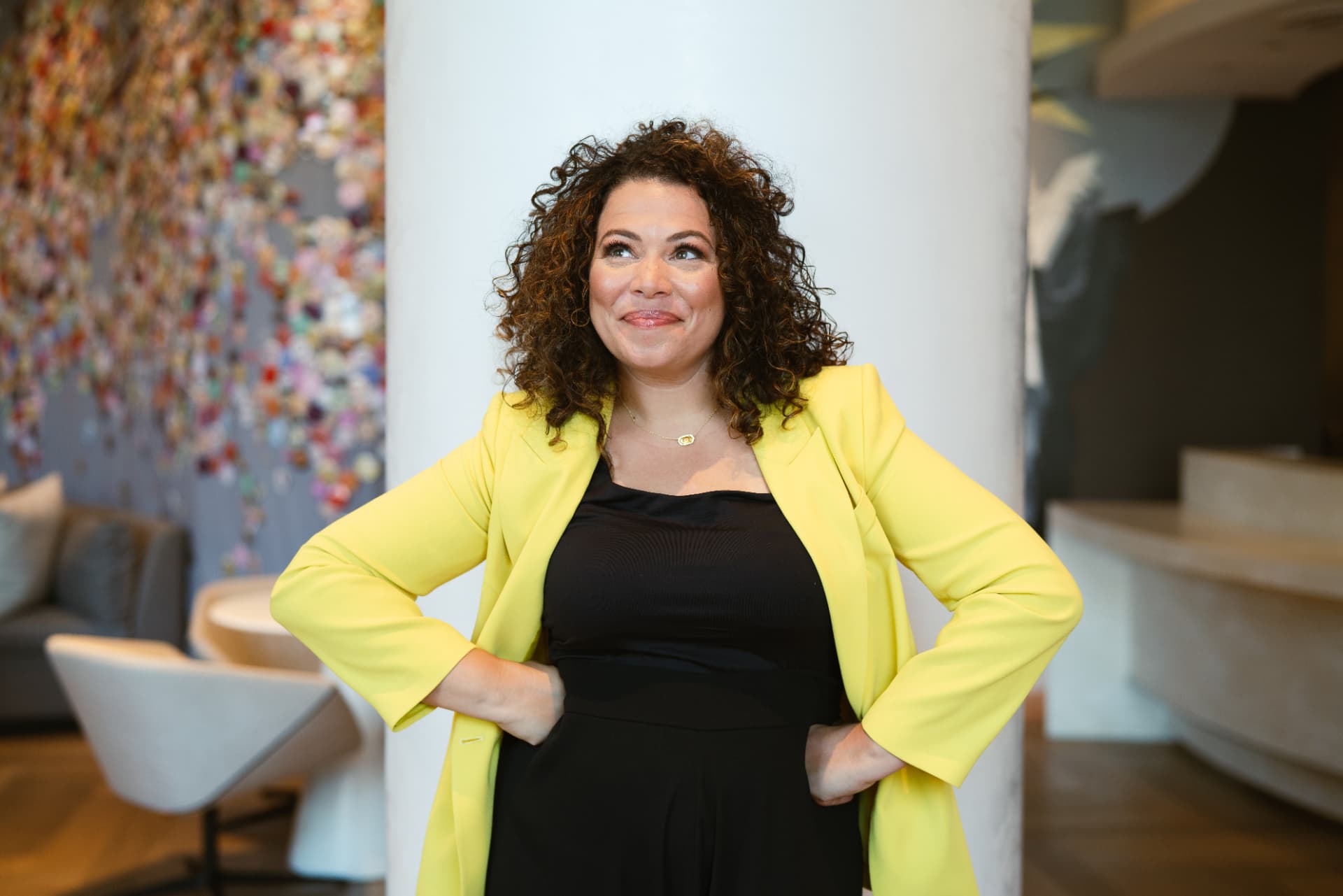
Dina Scippa, Founder and CEO, Enough Labs
Meet the founder
I’m Dina Scippa, Founder and CEO of Enough Labs, creator of the Decision Velocity Index™, leadership coach, speaker, podcast host, unapologetic feminist, and professional namer of the thing everyone else in the room has agreed not to mention.
That last part is usually what people remember.
I have a gift for listening beneath what someone is saying and finding the actual issue, the fear hiding underneath the process problem, the control dynamic dressed up as collaboration, or the decision everyone keeps discussing because no one wants to own it.
But that instinct did not come from nowhere. It was built through more than twenty years inside organizations, working alongside leaders making complicated decisions under real pressure.
I have worked across consulting firms, global development programs, boardrooms, cabinet meetings, and crisis tables. I have designed and led leadership programs around the world, coached more than 200 leaders, and served as Chief of Party for Gender LEAD, the largest global gender-equality initiative funded by USAID.
I know how organizations operate on paper. I also know how power, fear, trust, ego, identity, and unspoken expectations determine what actually happens once the meeting begins.
( 02 ), The more personal truth
For much of my life, I believed I had to prove that I was enough.
So I became excellent at achieving. I overprepared. Overperformed. Read the room. Anticipated what everyone needed. Tried to be impressive, indispensable, and very difficult to criticize.
Basically, I developed an advanced degree in making competence look effortless while privately second-guessing myself.
That strategy took me far.
It also exhausted me.
No one was judging me as harshly as I was judging myself. I could keep waiting for another title, another institution, or another person to confirm what I already knew, or I could decide that my own judgment was enough to move.
The beginning of Enough Labs
I stopped waiting for someone else’s organization to make room for my vision.
I had spent nearly a decade managing international development projects before taking one of the boldest professional leaps of my career: pursuing the opportunity to become a gender adviser.
It was the work I had gone to school to do. Work I cared about deeply. Work that allowed me to influence how organizations approached gender equality and women’s leadership around the world.
And I was good at it.
But over time, I realized I was tired of fitting the fullness of my ideas inside someone else’s worldview.
I used to joke: Why am I waiting for the CEO to recognize my brilliance when I could become the CEO of my own company?
So, in 2020, I did.
Not because I had a flawless plan. I absolutely did not. I founded Enough Labs because I believed women deserved more than advice about becoming palatable, polished, and endlessly prepared.
They deserved spaces where they could stop performing confidence and build a real relationship with their own authority.
That was the work then. It is still at the heart of the work now.
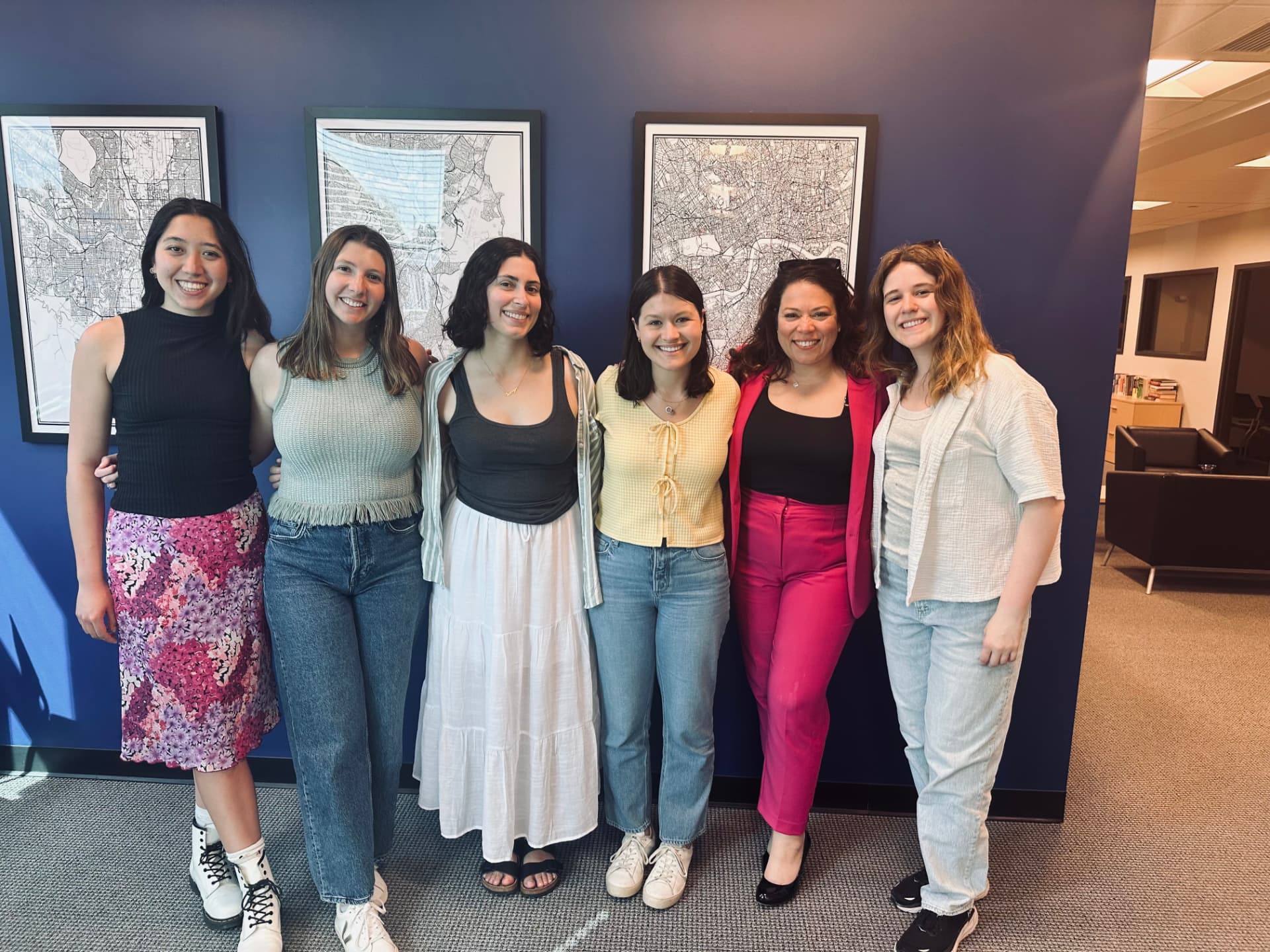
Six years of coaching
Confidence was not the whole story.
Again and again, I worked with smart, deeply capable women who knew what they were doing.
They did not lack ambition.
They did not lack insight.
They did not lack another credential, regardless of how eagerly the world kept suggesting one.
What they struggled with was acting on what they knew when the stakes were high.
They softened recommendations. Gathered more evidence. Sought more input. Prepared for every possible objection. Tried to make decisions so airtight that no one could question their judgment.
And honestly? That behavior made sense.
Women are told to be confident but not arrogant. Decisive but not controlling. Ambitious but not threatening. Powerful, but preferably in a way that keeps everyone else comfortable.
That is not a confidence problem. That is leadership inside an unequal margin for error.
The larger pattern
And once I saw that clearly, I could not unsee the larger pattern.
The problem was never only inside the leader. Organizations routinely tell people to take ownership while punishing them for making the wrong call. They give managers responsibility without meaningful authority. They ask women to speak up and then critique how they said it. They reward collaboration until everyone is involved and no one owns the decision. They tell leaders to move faster while creating approval structures that make movement nearly impossible.
Then, when people hesitate, the organization sends them to confidence training.
No. We are not doing that anymore.
Individual development matters. I have built my career around it. But we cannot keep trying to fix people without examining the environment that shaped their behavior.
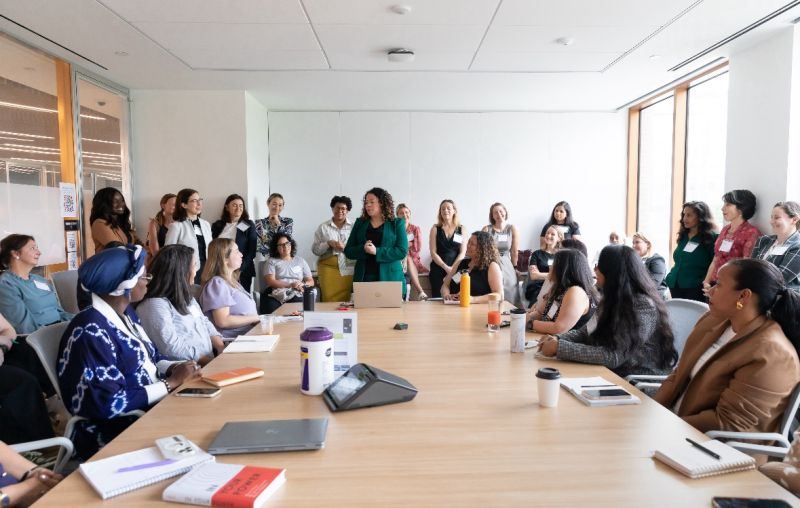
The Decision Velocity Index
That realization led me to create the Decision Velocity Index.
The Decision Velocity Index puts evidence behind what I have spent my career seeing.
The DVI measures how leaders make and move consequential decisions when they are operating under pressure, navigating ambiguity, balancing competing priorities, and incorporating input from multiple stakeholders.
It helps us understand both sides of the equation:
- The behaviors shaping how a leader decides
- The organizational conditions making those behaviors more or less likely
Because a leader who needs to strengthen their judgment and a leader who has learned that using their judgment is dangerous are not experiencing the same problem.
They should not receive the same solution.
The DVI gives us a way to tell the difference. It turns what people have felt but struggled to articulate into something an organization can see, discuss, and change.
Directness without care is not courage. It is performance.
What it is like to work with me
I will tell you the truth.
I will ask the question everyone else has been politely avoiding. I will notice who has not spoken, where the energy changed, and which “process issue” is actually a power issue wearing sensible shoes.
But I am not interested in humiliating people or storming into an organization to announce everything it is doing wrong.
Directness without care is not courage. It is performance. People tell me the truth because they know I am on their side, even when I am challenging them.
That is the balance I bring into every room:
- Warmth without coddling.
- Evidence without sterility.
- Candor without blame.
- Humor when we need to breathe.
And an unwavering belief that people are capable of more when they are finally able to see what is getting in their way.

What we are building at Enough Labs
Enough Labs is becoming more than a coaching practice and more than one founder’s body of work.
We are building a leadership-performance company centered on decision velocity: the ability to make and move consequential decisions with clarity, authority, and trust, even when certainty is unavailable.
The Decision Velocity Index is at the center of that work.
Around it, we are building:
- Individual leadership diagnostics and debriefs
- Enterprise assessments
- Decision Velocity Workshops
- Longer-term leadership labs
- Speaking and thought leadership
- A trained network of DVI coaches
I want this work to travel further than I can take it alone. Not by watering it down or turning it into another generic leadership model, but by building a company with a clear methodology, shared standards, and the courage to keep telling the truth.
Why I care
I know what becomes possible when a woman stops abandoning what she already knows.
I know what changes when a leader realizes they do not need to wait for complete certainty before they move.
And I know how much talent organizations waste when the people closest to the answer do not believe they have permission to say it.
This work is not ultimately about making decisions faster. It is about closing the distance between what leaders know and what they are willing, and able, to do about it.
It is about creating organizations where authority is real, ownership means something, and people do not have to perform certainty to be trusted.
It is about helping more of us stop waiting for permission to become who we already are.
That is what I am about.
And that is what we are building.
Your leaders may already know what needs to happen.
Let’s find out what is keeping them from moving.